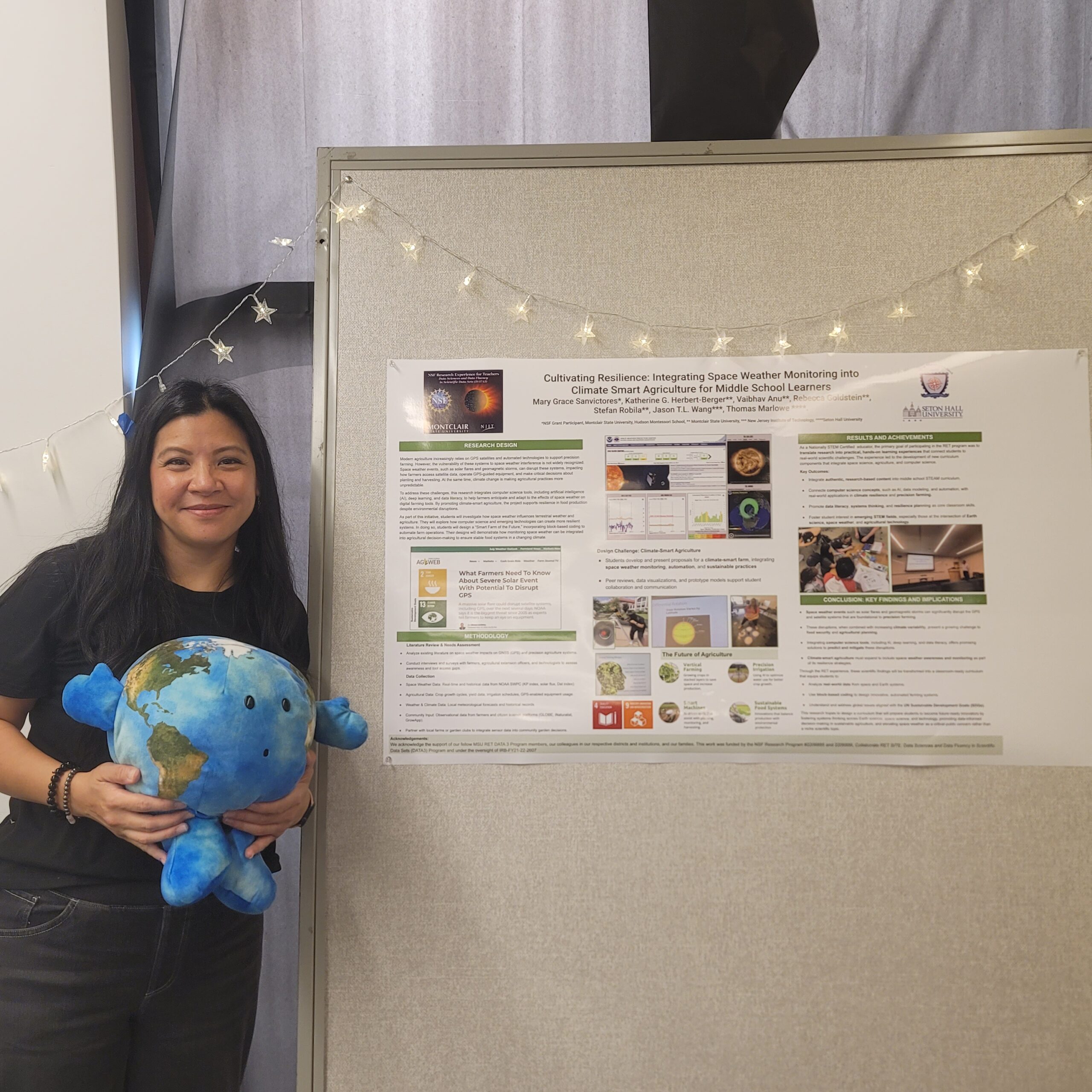
Sanvictores wants students to investigate how space weather influences terrestrial weather and agriculture.
Mary will incorporate block-based coding to automate farm operations, demonstrating how monitoring space weather can be integrated into agricultural decision-making
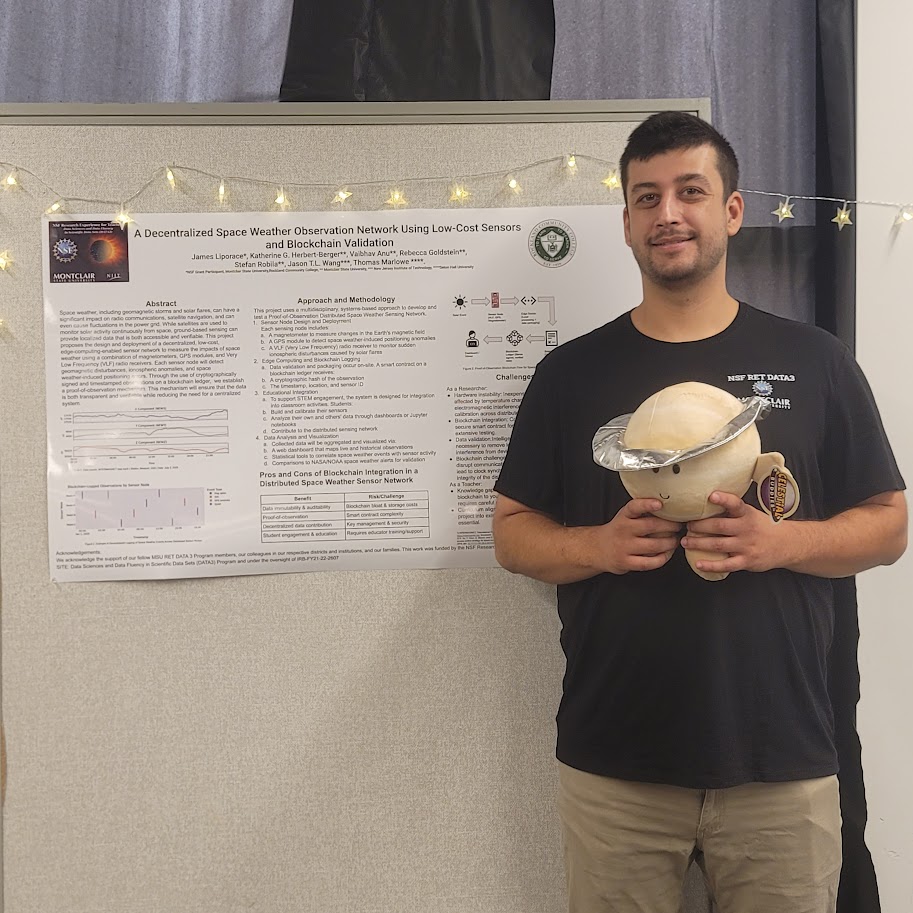
In James’ research, he proposes a design and deployment of a decentralized, edge-computing-enabled sensor network.
The purpose of the sensor network is to measure the impacts of space weather using a combination of magnetometers, GPS modules, and Very Low Frequency (VLF) radio receivers.
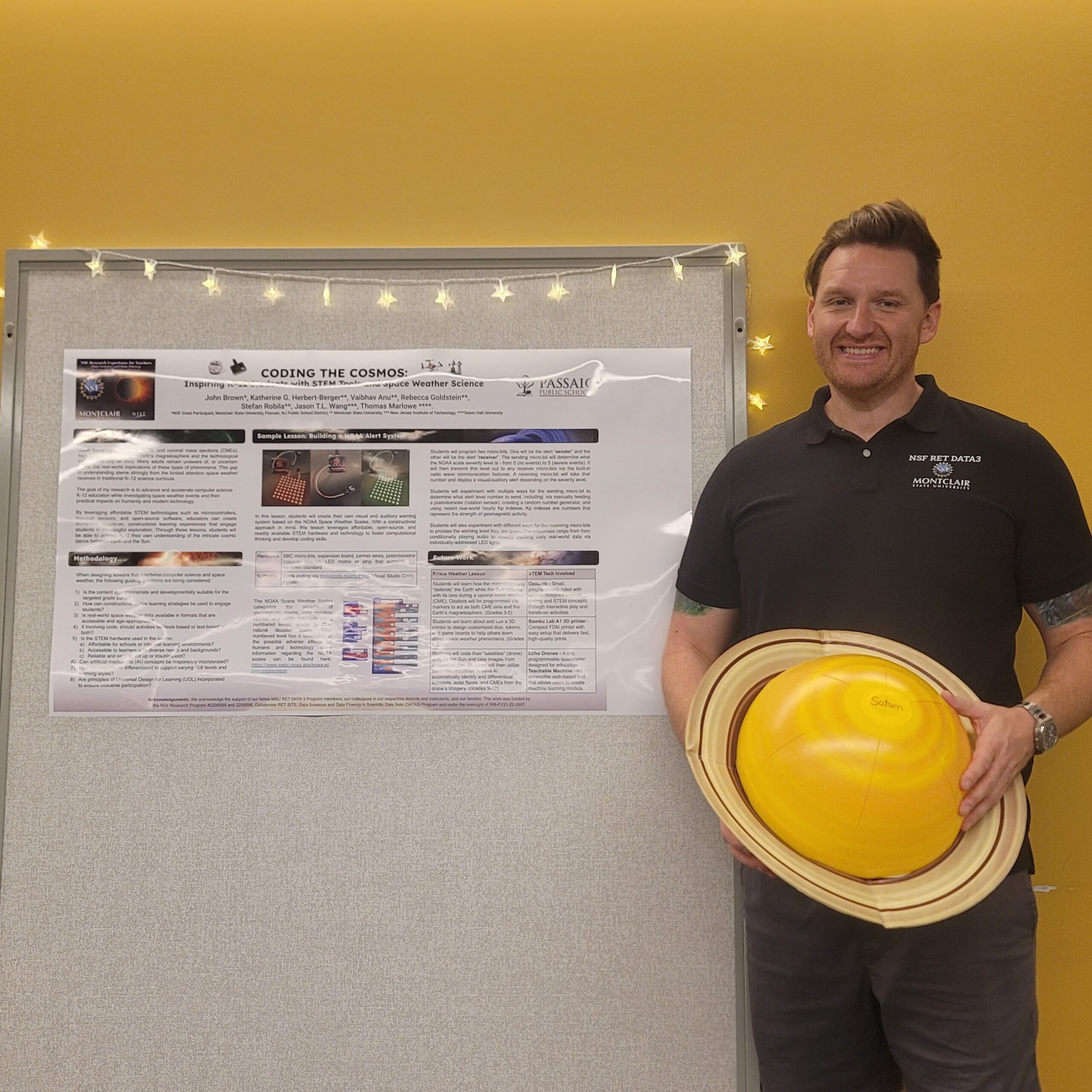
In John’s research his goal is to advance and accelerate computer science K-12 education while investigating space weather events and their practical impacts on humanity and modern technology.
By leveraging affordable STEM technologies such as microcontrollers, low-cost sensors, and open-source software, students can have an immersive, hands-on, constructivist learning experience that engages the students in meaningful exploration.
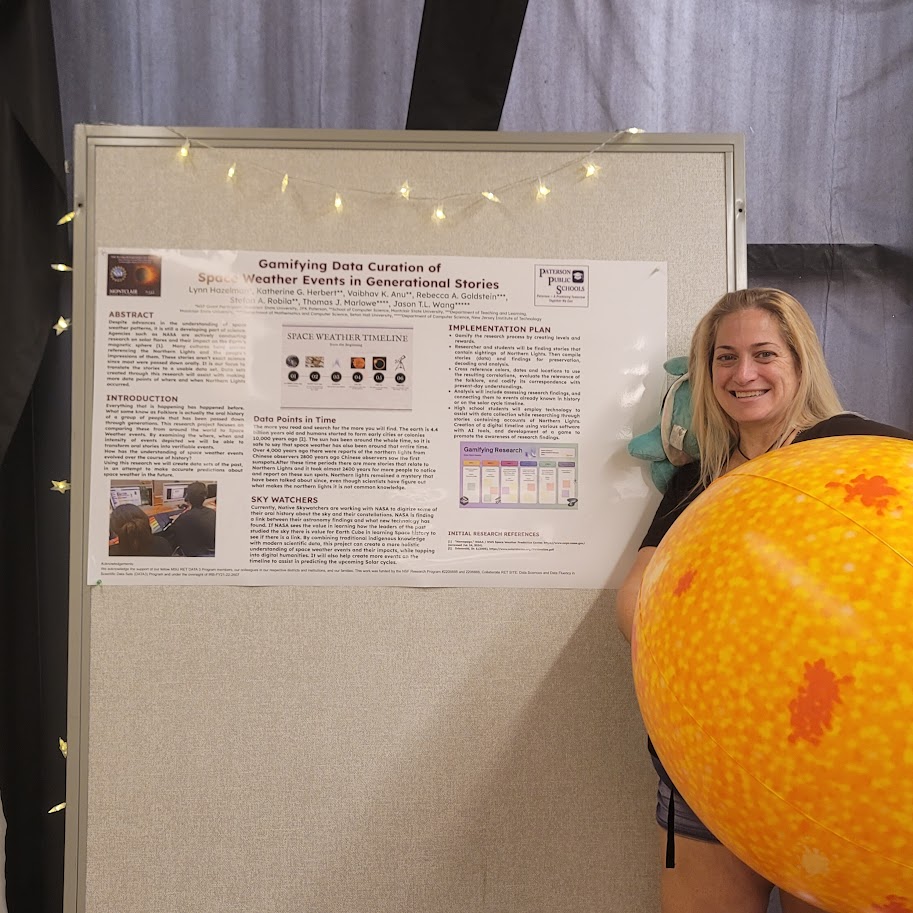
Hazelman’s focus is to find ways of translating cultural folklore and traditions into usable data sets. For all events that have happened before and continue to happen again, Lynn’s research compares these stories from around the world to Space Weather events. This is done by looking where, when, and the intensity of such events.
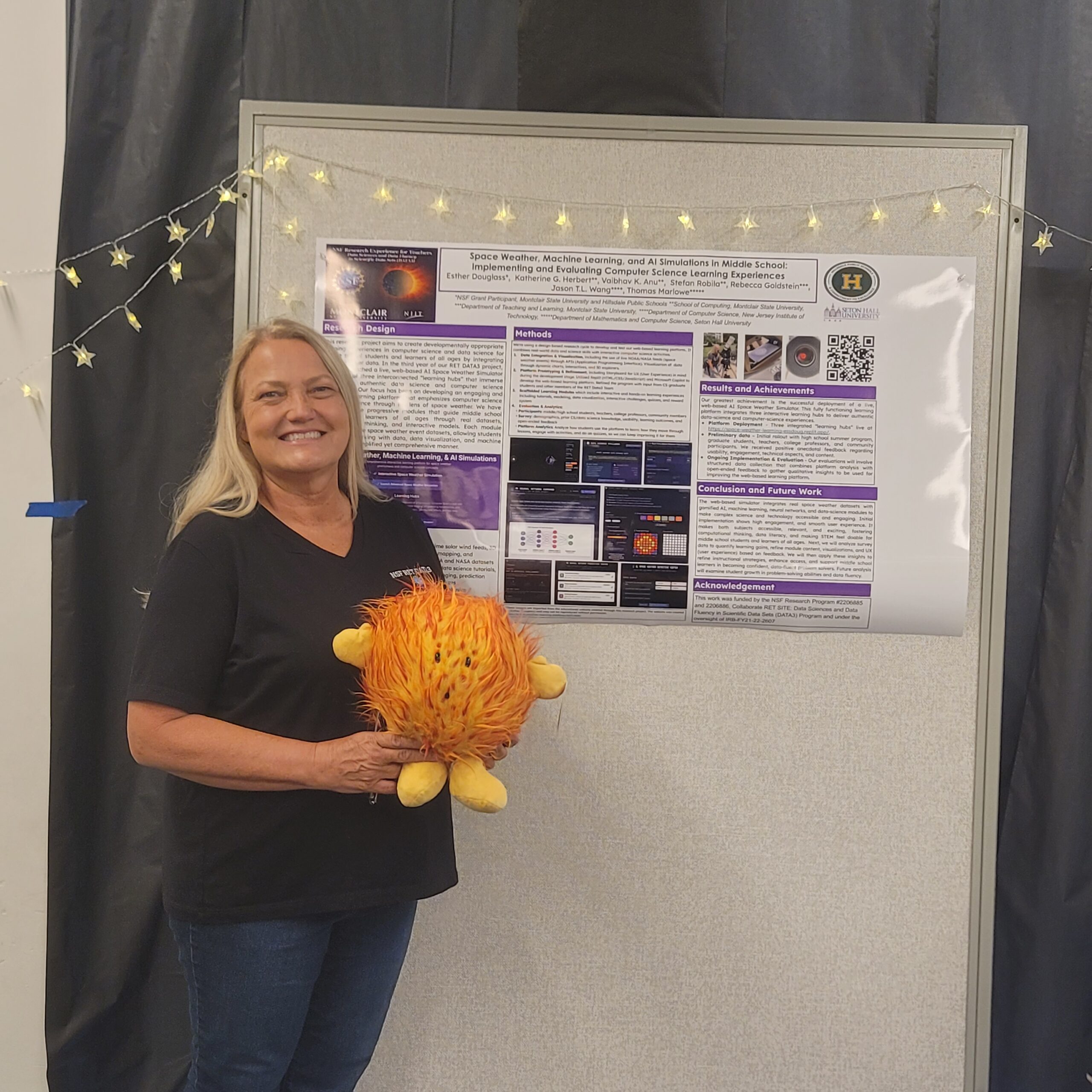
Douglass aims to create developmentally appropriate learning experiences in computer science and data science for middle school students and learners of all ages by integrating space weather data. This includes a web-based AI Space Weather Simulator with three progressive modules that guide students to think computationally
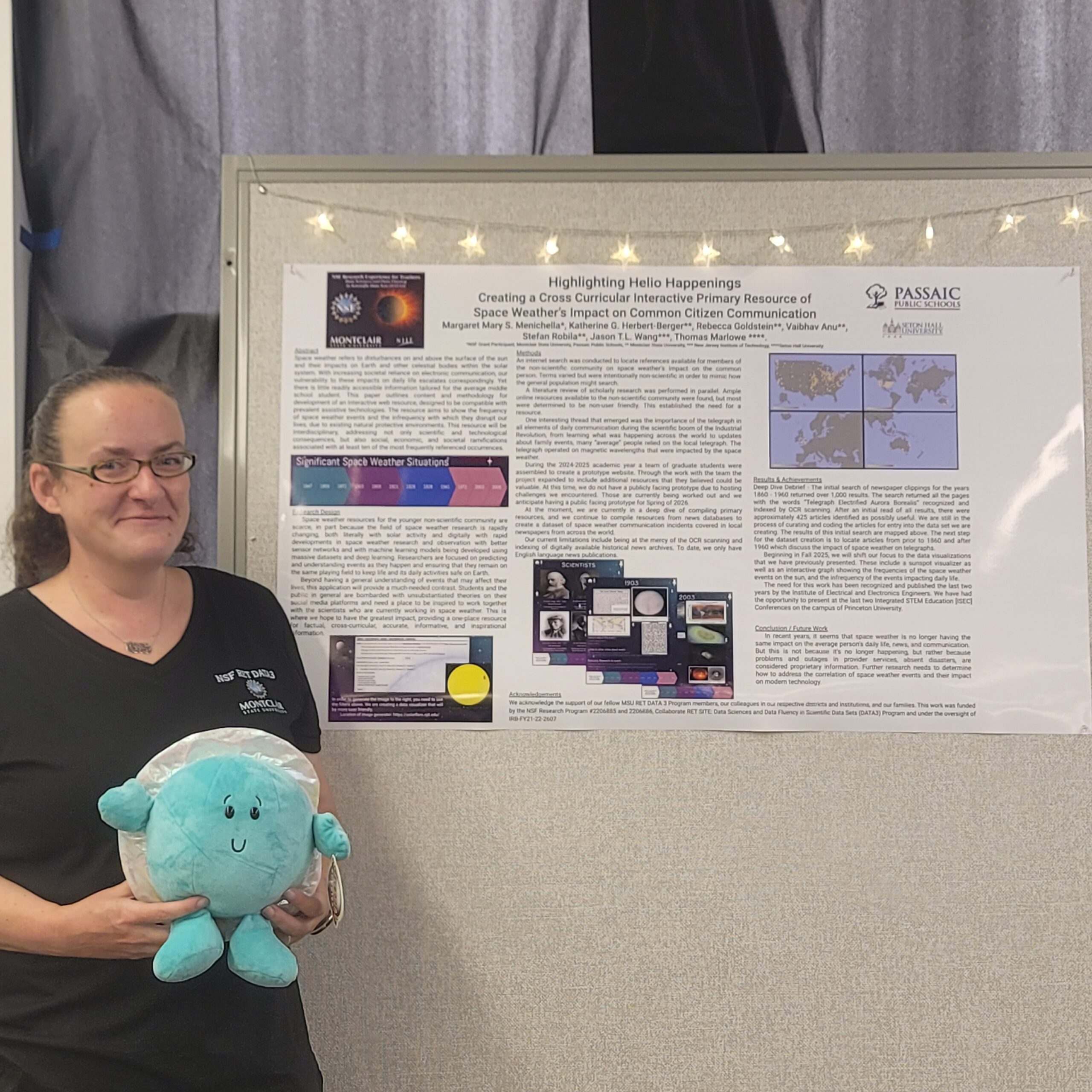
Menichella prioritizes well awareness of the social impacts of space weather events, specifically through the lens of middle school students. She outlines the content and methodology for the development of an interactive web resource. This aims to show the frequency of space weather events and the infrequency in which they disrupt our lives
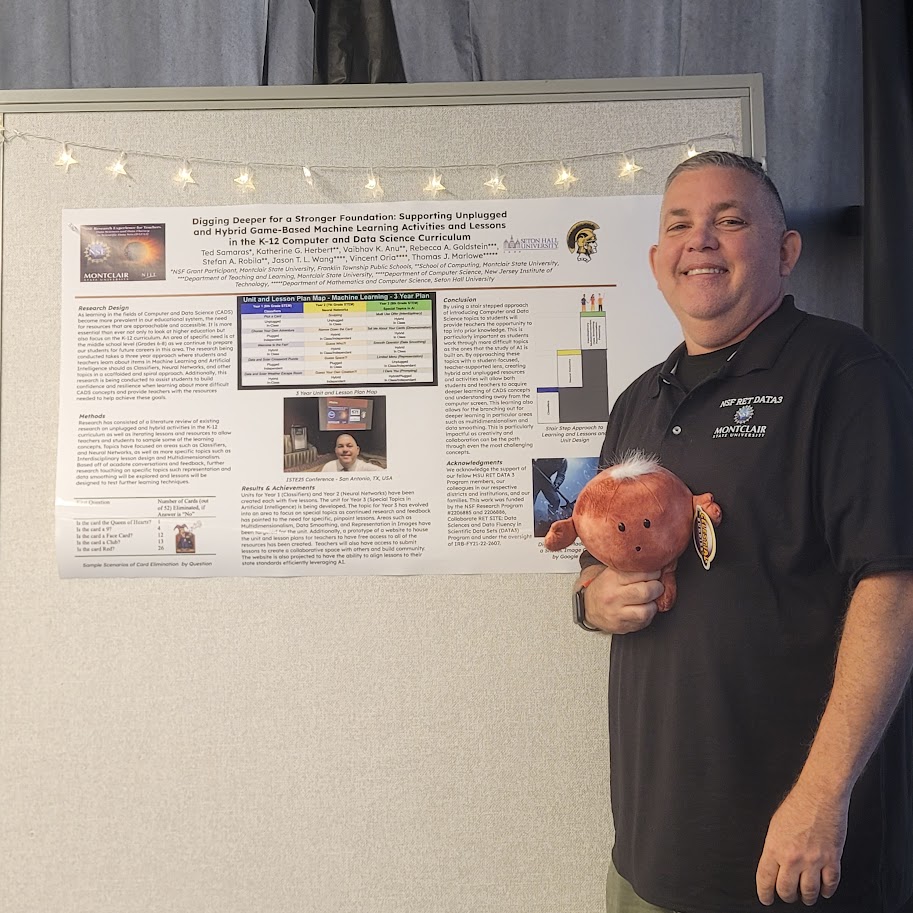
Samaras is establishing a three year lesson plan that encompasses the fields of Computer and Data Science in the K-12 curriculum. This includes Classifiers in the 1st year, followed by Neural Networks in the 2nd, and Special Topics in AI in the 3rd. This would not only help students develop more knowledge about the study, but become a resource for teachers to utilize for their students.
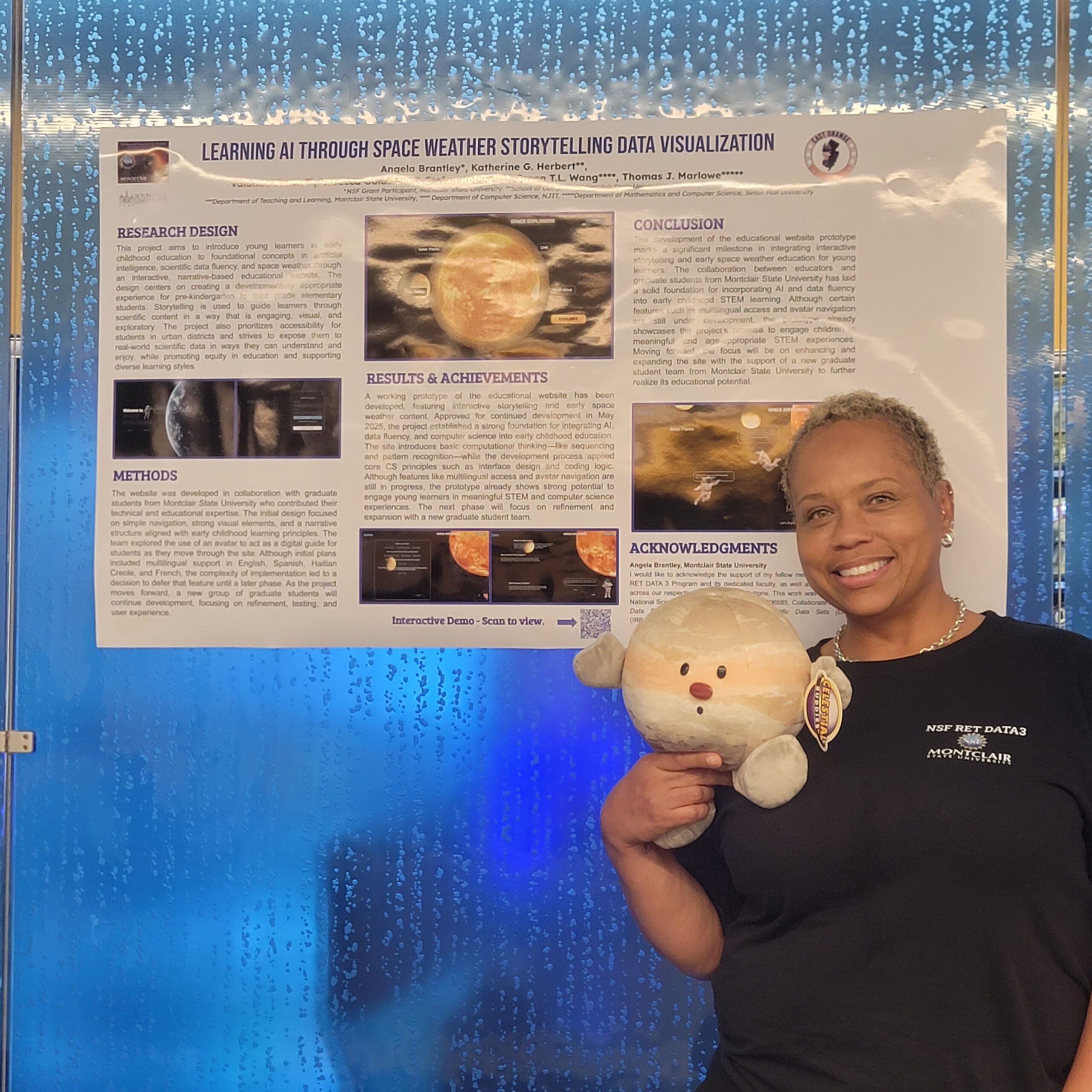
Brantley aims to introduce young learners in early childhood education to foundational concepts in artificial intelligence, data science, and space weather. This is expressed in an interactive, narrative-based educational website.
The project also prioritizes accessibility for students in urban districts and strives to expose them to data in ways that they can learn and enjoy, while promoting equity in education.
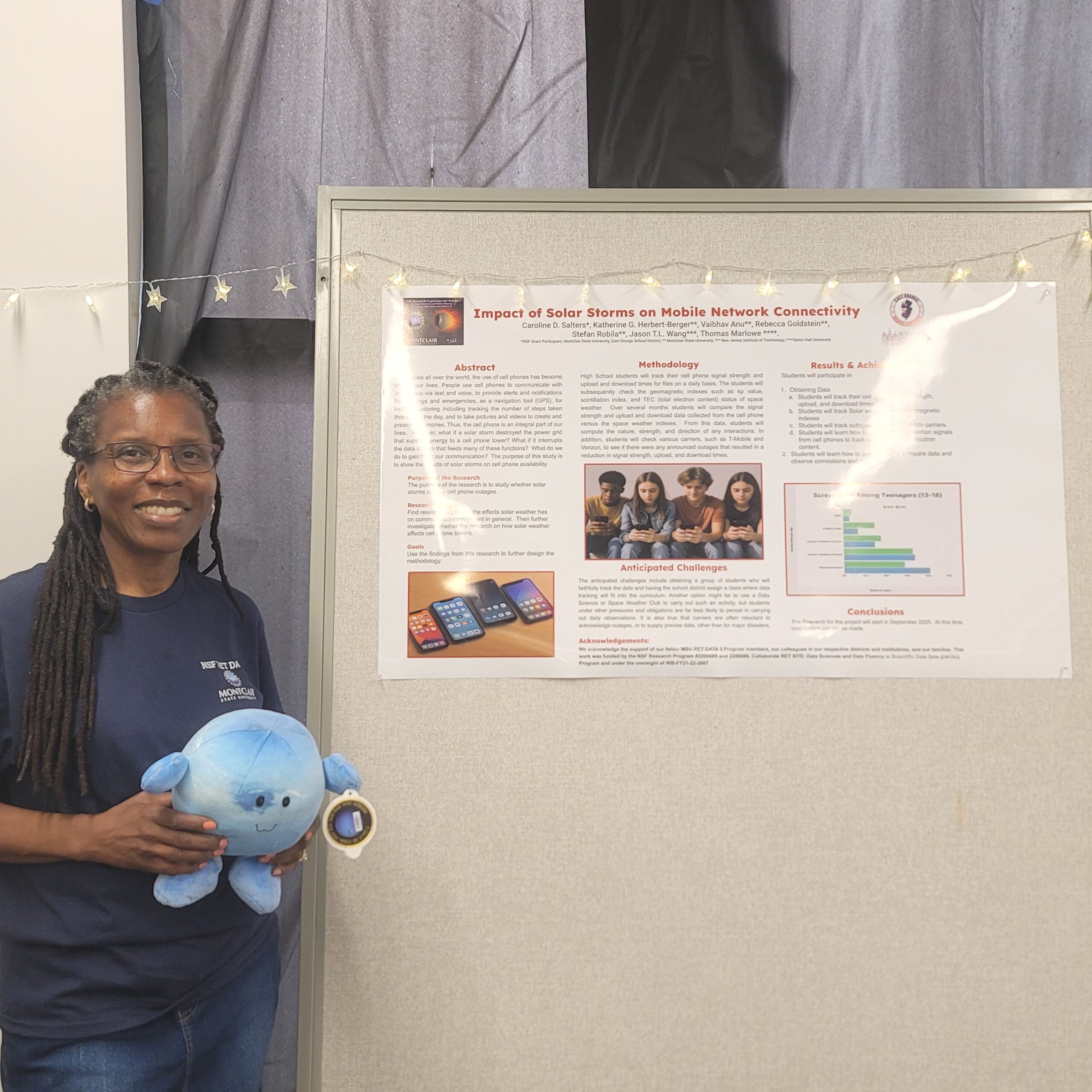
Salters wants to study whether solar storms cause cell phone outages, finding research papers on the effects of solar weather interfering with communication equipment in general.
Caroline will have high school students track their cell phone signal strength and upload/download times for files on a daily basis. The students will also check geomagnetic indices and establish comparisons from there.
Cannella wants to explore how data science predicts space weather and in turn effectively minimize the impact on technology through emergency response systems in place.
The goal of Alaina’s study is to engage middle school students in hands-on activities involving data science and create solutions to the real world impacts of space weather phenomena through an interactive simulation
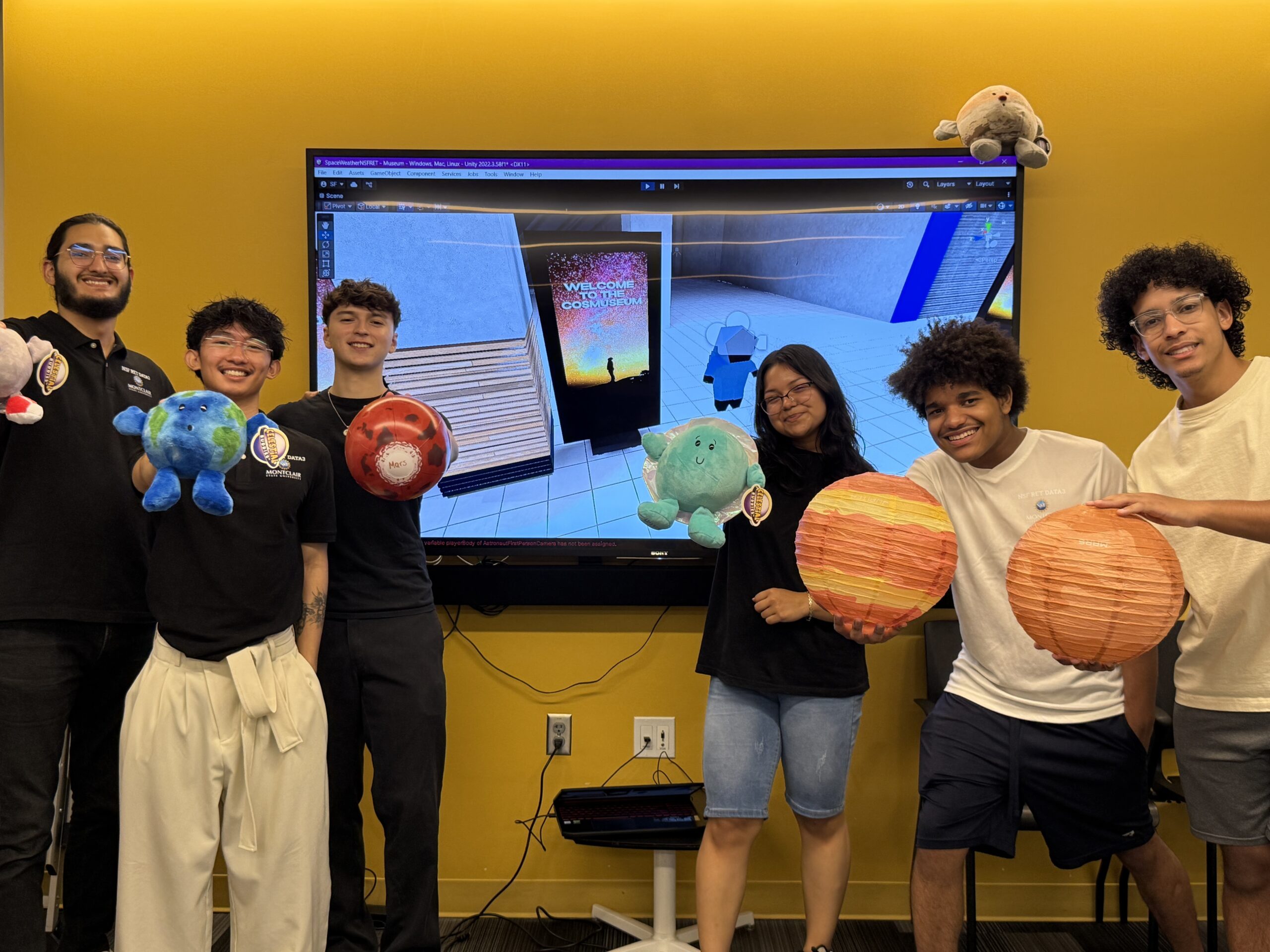
Students not only had the opportunity to assist the participant’s with their research. They also had the chance to establish their own, encompassing space weather, education, and computer science.
“Cosmuseum” will demonstrate a lesson plan formulated for all audiences that will teach the fundamentals of space weather, through a virtual reality simulation.